Discover Suzhou’s Timeless Cultural Treasures
Suzhou isn’t just another Chinese destination—it’s a living museum where 2,500 years of refined culture flow through garden walls and canal waters. For international visitors seeking authentic experiences beyond standard tours, this ‘Venice of the East’ offers unparalleled immersion into classical Chinese aesthetics. Unlike crowded megacities, Suzhou preserves its soul through UNESCO-listed gardens, silk traditions, and artistic heritage that feels intimately accessible. This guide reveals how to connect deeply with Suzhou’s culture while navigating as a foreign traveler, blending practical logistics with profound cultural insights you won’t find in generic guidebooks.
Mastering the Garden Experience: More Than Just Pretty Views
Suzhou’s Classical Gardens (UNESCO World Heritage since 1997) aren’t merely parks—they’re philosophical landscapes embodying Daoist harmony between humans and nature. While Humble Administrator’s Garden and Lingering Garden top most itineraries, international visitors often miss the deeper meaning behind these spaces.
Unlocking Garden Wisdom
Understanding these key principles transforms your visit:
- “Borrowed Scenery” (Jiejing): Gardens frame distant pagodas or mountains as intentional extensions of the design
- Water Symbolism: Ponds represent the ocean, embodying Taoist concepts of infinity
- Seasonal Storytelling: Lotus blooms in summer symbolize purity; plum blossoms in winter represent resilience
Pro Tip for Foreigners: Rent an English audio guide at the garden entrance (available at major sites), but arrive at opening time (7:30 AM) to experience the gardens with local retirees practicing tai chi—this spontaneous cultural moment reveals how these spaces remain living community hubs.
The Silk Journey: From Cocoon to Couture
Suzhou has been China’s silk epicenter since the Song Dynasty. While many travelers buy silk scarves as souvenirs, authentic cultural immersion happens at the source.
Where International Visitors Should Go
- Suzhou Silk Museum: Skip the crowded exhibits; head to the live silkworm room (open March-October) where you’ll see caterpillars spinning cocoons—a mesmerizing process rarely shown elsewhere
- Shuangyang Silk Workshop: A family-run studio in Pingjiang Historic District offering 2-hour workshops where you can try reeling silk threads (with English-speaking guides)
- Nanxinxiang Alley: Hunt for “real” silk by checking for the official silk mark and feeling for the characteristic cool, smooth texture
Critical Warning: Avoid “silk markets” near tourist hubs—90% sell polyester blends. Authentic mulberry silk should burn with a hair-like smell, not melt like plastic.
Kunqu Opera: China’s Living Musical Heritage
As the “mother of Chinese opera” (UNESCO Intangible Heritage since 2001), Kunqu’s 600-year-old art form combines poetry, music, and martial arts. International visitors often find performances challenging due to classical Chinese lyrics—but there are smart ways to engage.
Your Accessible Opera Experience
Forget expecting full comprehension. Instead:
- Focus on Visual Language: Notice how hand gestures convey specific meanings (a flickering hand = fire; circling motions = the moon)
- Visit Suzhou Kunqu Opera Museum: Interactive exhibits with touchscreen translations and costume displays make the art form tangible
- Attend “Opera in the Garden” Events: Summer performances at Tuisi Garden use simplified storytelling with English program notes
Arrive 30 minutes early for pre-show talks at Suzhou Kunqu Theatre—staff often demonstrate basic movements foreigners can mimic, turning passive viewing into participatory culture.
Culinary Culture: Beyond Sweet and Sour Pork
Suzhou cuisine (Su Bang Cai) represents Jiangnan’s delicate, sweet-influenced cooking style—worlds apart from Sichuan or Cantonese food. For international palates, understanding its philosophy prevents culinary confusion.
Decoding Suzhou’s Food Culture
Key principles to guide your tasting:
- Seasonality Rules: Eel dishes peak in summer; hairy crab season (Sept-Oct) is a cultural event
- Sweet ≠ Dessert: Sweetness balances flavors (e.g., in braised pork), not just for sweets
- Tea Pairing: Biluochun green tea cuts through rich dishes—ask for it instead of beer
Foreigner-Friendly Spots:
- Lao Suzhou (老苏州): English menu with cultural explanations beside each dish
- De Yue Lou (得月楼): Historic restaurant where scenes from Sleeping Beauty were filmed—try squirrel-shaped mandarin fish
- Night Market at Shantang Street: Sample osmanthus cakes and sticky rice dumplings
Hidden Gems: Cultural Experiences Beyond Guidebooks
For travelers seeking deeper connections, these lesser-known opportunities deliver authentic moments:
Canal Culture Uncovered
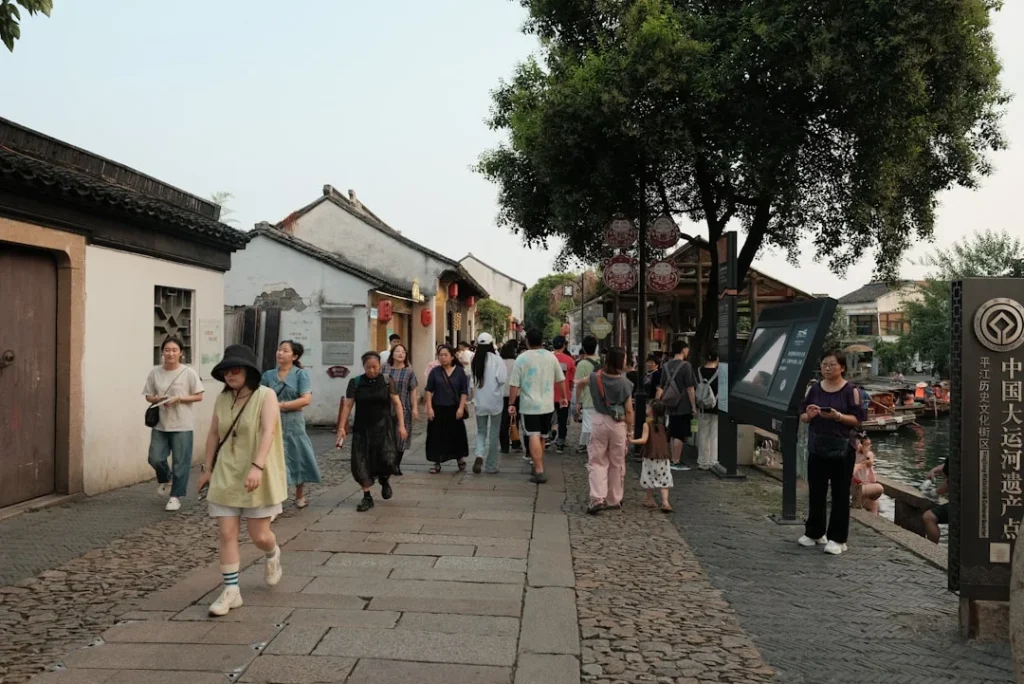
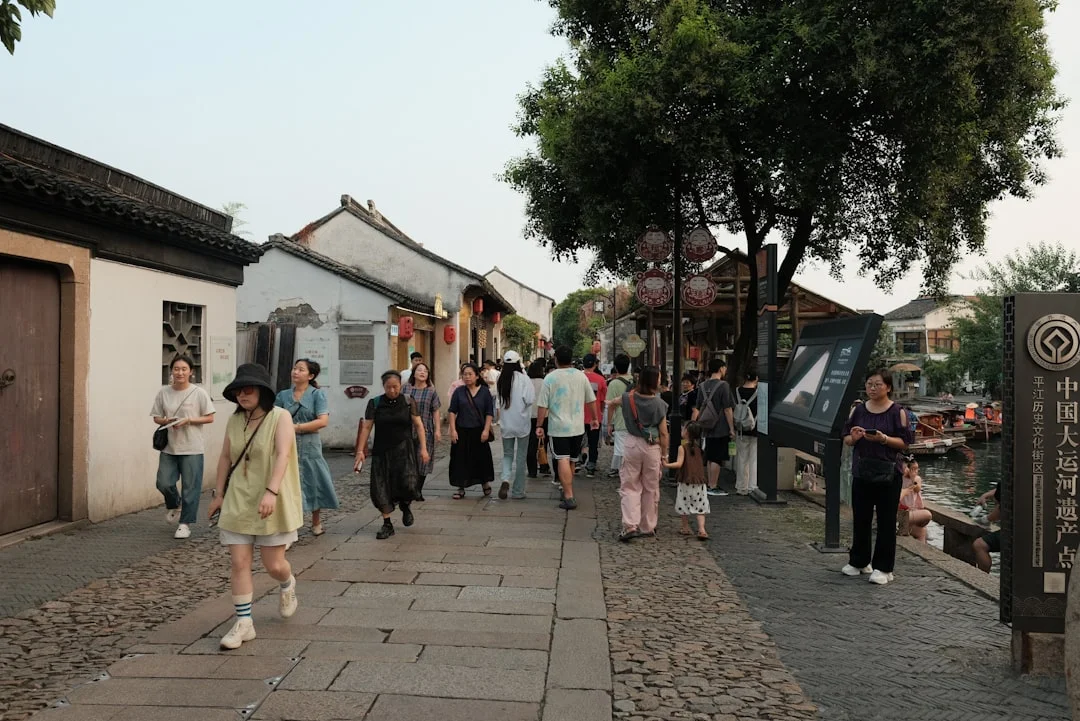
While tourists crowd Shantang Street, take a local 2 RMB ferry (not the tourist boats) along the Grand Canal. Watch residents wash clothes at ancient stone docks—a living tradition unchanged for centuries. The best stretch runs between Xumen Gate and Panmen Gate at dusk.
Embroidery Workshops with Masters
Suzhou embroidery (one of China’s four great styles) features threads split thinner than hair. At the Suzhou Embroidery Research Institute, international visitors can book 90-minute sessions creating simple motifs with English-speaking instructors—no prior skill needed. Your piece becomes a meaningful souvenir.
Essential Tips for International Visitors
Maximize your cultural experience with these practical insights:
Navigating Language Barriers
- Download Pleco (with camera translation) and Didi (China’s Uber)—essential for garden addresses
- Carry a physical card with “I’m visiting Suzhou’s gardens” written in Chinese for taxi drivers
- Learn 3 phrases: Xie xie (thank you), Nǐ hǎo (hello), Bù dǒng (I don’t understand)
Cultural Etiquette Essentials
- Never point with chopsticks or stick them upright in rice (resembles funeral rites)
- Remove hats/shoes when entering temples or private homes
- Accept gifts with both hands—it’s considered rude to open immediately
Timing Your Visit Strategically
Avoid May Day (May 1-3) and National Day (Oct 1-7) holidays when domestic tourism swells. Instead, target:
- March-April: Magnolias bloom in gardens; comfortable temperatures
- September: Post-summer crowds fade; crab season begins
- Weekdays: Gardens are 70% less crowded than weekends
Your Cultural Journey Awaits
Suzhou rewards travelers who move beyond photo ops to engage with its living culture. By understanding the philosophy behind gardens, participating in silk workshops, or decoding Kunqu’s visual poetry, you’ll carry home more than souvenirs—you’ll gain perspective on China’s artistic soul. Remember: the most profound moments often happen when you pause by a canal watching locals feed koi, or share tea with an embroidery master. These authentic connections transform a trip into a cultural awakening. Pack comfortable shoes, an open mind, and this guide—you’re ready to experience Suzhou like an honored guest, not just a tourist.